





Biyomedikal Mühendisliği Enstitüsü

Eğitim:
Psikoloji Lisans (B.A.): Boğaziçi Üniversitesi, 1996
Psikoloji Yüksek Lisans (M.A.): Boğaziçi Üniversitesi, 1998
Davranışsal Nörobilim Doktora (Ph.D.): Düsseldorf Üniversitesi, Almanya, 2005
İş Deneyimi:
1999-2002 Lisansüstü Bursiyeri, Düsseldorf Üniversitesi, Araştırma Eğitim Grubu "Sinir sisteminin patolojik süreçleri: Genlerden davranışa", Alman Araştırma Vakfı (DFG) tarafından finanse edilmiştir
2002-2005 Lisansüstü Araştırma Görevlisi, Fizyolojik Psikoloji Enstitüsü, Düsseldorf Üniversitesi, Düsseldorf, Almanya
2005-2006 Doktora Sonrası Araştırmacı (post-doc), Fizyolojik Psikoloji Enstitüsü, Düsseldorf Üniversitesi, Düsseldorf, Almanya
2006-2011 Doktora Sonrası Araştırmacı (post-doc), Tıp Bölümü, Brookhaven Ulusal Laboratuvarı, Upton, NY, ABD
2011-2014 Kıdemli Araştırma Bilim İnsanı ve Araştırma Yardımcı Doçenti, Nörobiyoloji ve Davranış Bölümü, Stony Brook Üniversitesi, Stony Brook, NY, ABD
2013-2014 Konuk Doçent, Tanısal Radyoloji Bölümü, Yale Üniversitesi, New Haven, CT, ABD
2014-2018 Doktor Öğretim Üyesi, Psikoloji Bölümü, Yeditepe Üniversitesi, İstanbul, Türkiye
2018-2020 Doktor Öğretim Üyesi, Biyomedikal Mühendisliği Enstitüsü, Boğaziçi Üniversitesi, İstanbul, Türkiye
2020-devam Doçent, Biyomedikal Mühendisliği Enstitüsü, Boğaziçi Üniversitesi, İstanbul, Türkiye
Deneyim:
İNSAN ARAŞTIRMALARI
En uzun geçmişim temel sinirbilim araştırmalarına dayansa da (aşağıda kalın harflerle başlayan bölümlere bakınız), son zamanlarda insan araştırmalarıyla da ilgilenmeye başladım. Gezinim (navigasyon) üzerine, “Downtown Üsküdar Çalışması” (önceden 873178 H2020-MSCA-RISE-2019-iNavigate tarafından finanse edilen) adını taşıyan bir araştırma projesi yürütüyorum. Adından da anlaşılacağı gibi, yoğun nüfuslu, karmaşık ve sürekli değişen bir ortamda insan navigasyonunu incelemek için benzersiz bir yer seçtik. Ayrıca, iNavigate hakkında daha fazla bilgi için https://inavigate-eu.bogazici.edu.tr/ (eski adıyla https://www.inavigate.eu/) adresini ziyaret edebilirsiniz. Ayrıca, ülkelerimizin nöroteknolojik gelişmelere ilişkin bakış açılarını, özellikle de nöroteknolojilere yönelik ihtiyaçlarını, ilgilerini, erişimlerini, bilgilerini ve güvenlerini ve bunların düzenlenip düzenlenmemesi gerektiğini daha iyi anlamak amacıyla, NeurotechEU (https://theneurotech.eu/) kuruluşundaki diğer araştırmacılarla birlikte yürüttüğüm ulusötesi bir çalışmanın proje lideriyim. Daha önce, insanlarda motivasyonu incelemek için “Bilişsel Çaba Görevi” veya “CoEffrT” adlı bir davranışsal araç ve HEFFORT adlı bir anket geliştirdim.
İlgili Hibeler:
873178 H2020-MSCA-RISE-2019
Schulz (CO) 15/7/23 – Present
Schulz (Acting CO) Jan 2023 – 14/7/23
‘Brain-inspired technologies for intelligent navigation and mobility (iNavigate)’
To bring together behavioral scientists, neuroscientists, computer scientists, and roboticists, residing in the EU/AC and the USA, to conduct joint research on intelligent navigation.
Role: Coordinator, PI
EPP-EUR-UNIV-2020-101004080 - WP6 Societal Innovation subgroup project
Schulz (PI) 10/2021 – Present
‘Understanding societal challenges: a NeurotechEU perspective’
A trans-national study with the goal to understand societal perspectives on neuro-technological advances.
Role: PI
İlgili Makaleler:
Schulz, D., Lillo-Navarro, C., Slors, M., Hrabeczy, A., Gustafsson, K., Reuter, M. (2023). Understanding societal challenges: a NeurotechEU perspective. Frontiers in Neuroscience, submitted.
Bilgen, G., Tanriverdi, D., Schulz, D. (2022). Predicting cognitive effort: role of mental energy, performance feedback, arithmetic skill, and caffeine. Advance. Preprint available at: https://doi.org/10.31124/advance.20738347.v2
KLİNİK ÖNCESİ NÖROGÖRÜNTÜLEME
Şu anda, TÜBİTAK 1004 Mükemmeliyet Merkezi Destek Programı kapsamındaki “Nöroteknolojik Çözümler Platformu (Proje P11)” projesine bağlı bir araştırmacıyım. Bu projede, PET/CT, MRI ve davranışsal verileri kullanarak yaşlanan dişi sıçan beyninin bir atlasını oluşturmayı hedefliyoruz (https://ntcp.bogazici.edu.tr/tr). Katılmakla ilgileniyorsanız lütfen benimle iletişime geçin (İŞ İLANI: Bu proje kapsamında 2 doktora öğrencisi arıyorum). Daha önce, davranış sırasında PET taramasına olanak tanıyan ve böylece dinamik ve geçici davranışların PET verilerine nasıl yansıdığını araştırmaya imkan veren davranışsal nörogörüntüleme yöntemini geliştirdim. Bunu başarmak için, manyetik bir tutucu vasıtasıyla sıçanın kafasına takılan RatCAP adlı minyatür bir PET tarayıcı, tarayıcıyı takan sıçanın hareket etmesine olanak tanıyan sarkaçlı bir destek yapısı, davranış sırasında radyoizotopun sürekli infüzyonunu sağlayan sağlam bir kateter implantı ve zaman içinde PET ile davranış verilerini ilişkilendirmek için yöntemler geliştirdik (bkz. Şekil 1. RatCAP). Bu yöntemleri, spontan ve cinsel davranış çalışmalarında tersinir izleyiciler olan 11C-raclopride ve 11C-PHNO ile ve dinamik benzeri, çoklu enjeksiyon protokolünde 18F-FDG ile kullanılmak üzere uyarladık. Ayrıca RatCAP'ı, uçuş sırasında sığırcık kuşlarının beyinlerini taramak için de kullandık. Son olarak, 9,4 T'de bir 1H-MRS çalışması yürüttüm; bu çalışmada, çaresizlik için seçici olarak yetiştirilmiş sıçanların hipokampüsünü ve frontal korteksini taradık.
.png)
Şekil 1. RatCAP. Üst sıra: Geniş bir hareket aralığına izin veren, yüksek uzamsal çözünürlüklü (< 2 mm FOV genişliğinde) bir 3D-PET tarayıcı. Ağırlığı (yaklaşık 250 g), üstte dönen ve neredeyse altı rotasyonel ve translasyonel serbestlik derecesinin tümüyle hareket etmesine izin veren, yaklaşık 1 m uzunluğunda yaylı, doğrusal bir teleskopik yapı tarafından desteklenmektedir. Alt sıra: RatCAP sistemi ile oluşturulan beyin görüntüleri, spontan davranış sergileyen bir sıçanın striatumunda dopamin D2 reseptör izleyicisi olan 11C-raclopride'ın spesifik alımını göstermektedir. Soldan sağa doğru koronal ve aksiyal görünümler gösterilmektedir.
İlgili Hibeler:
22AG016 TÜBITAK
Yücesoy (CO), Öztürk-Isik (PI) 15/5/23 – Present
‘Small animal imaging application and innovation platform for the detection of aging in the brain and musculoskeletal system’ (P11)
To atlas the female aging rat brain using PET/CT, MRI, and behavior.
Role: Researcher
1457181 National Science Foundation (NSF)
Balanoff (PI), Norell (co-PI) 4/1/15 – 11/30/17
‘Unraveling the deep history of avian neurological complexity: Implications for the origins of flight and organization of the modern avian brain’
Determine brain functions associated with flight in birds.
Role: Collaborator
R21DA029245 National Institutes of Health (NIH/NIDA)
Schulz (PI) 3/2/11 – 8/31/14
‘PET imaging in behaving animals: A new research paradigm for neuroscience’
Integrate PET using the RatCAP scanner with the simultaneous study of behavior.
Role: PI
İlgili Makaleler:
Gold, M.E.L., Norell, M., Budassi, M., Vaska, P., Schulz, D. (2018). Rapid 18F-FDG uptake in brain of awake, behaving rat and anesthetized chicken has implications for behavioral PET studies in species with high metabolisms. Frontiers in Behavioral Neuroscience, 12, 115.
Gold, M.E.L., Schulz, D., Budassi, M., Gignac, P.M., Vaska, P., Norell, M.A. (2016). Flying starlings, PET and the evolution of volant dinosaurs. Current Biology, 26(7), R265-267.
Schulz, D., Vaska, P. (2011). Integrating PET with behavioral neuroscience using RatCAP tomography. Reviews in the Neurosciences, 22(6), 647-655.
Maramraju, S.H., Smith, S.D., Junnarkar, S.S., Schulz, D., Stoll, S., Ravindranath, B., Purschke, M., Rescia, S., Southekal, S.S., Pratte, J.-F., Vaska, P., Woody, C.L., Schlyer, D.J. (2011). Small animal simultaneous PET/MRI: Initial experiences in a 9.4 T microMRI. Physics in Medicine & Biology, 56(8), 2459-2480.
Schulz, D., Southekal, S., Junnarkar, S.S., Pratte, J.-F., Purschke, M.L., Stoll, S.P., Ravindranath, B., Maramraju, S.H., Krishnamoorthy, S., Henn, F.A., Woody, C.L., Schlyer, D.J., Vaska, P. (2011). Simultaneous assessment of rodent behavior and neurochemistry using a miniature positron emission tomograph. Nature Methods, 8(4), 347-352.
Basında (Seçilmiş Haberler):
https://www.bnl.gov/newsroom/news.php?a=111235 (Brookhaven National Laboratory)
https://www.eurekalert.org/features/doe/2017-05/dnl-ab051817.php (EurekAlert by the AAAS)
https://www.nature.com/news/2011/110313/full/news.2011.155.html (Nature News)
https://www.sciencemag.org/news/2011/03/brain-scanner-accessory (Science)
https://www.nytimes.com/2011/03/15/science/15obpet.html (New York Times)
https://www.economist.com/babbage/2011/03/14/if-the-ratcap-fits (The Economist)
https://www.wissenschaft.de/technik-digitales/blick-ins-gehirn/ (Bild der Wissenschaft)
https://www.n-tv.de/wissen/RatCAP-erleichtert-Forschung-article2826486.html (n-tv)
https://sciencev2.orf.at/stories/1678576/index.html (ORF)
https://www.focus.de/wissen/natur/wissenschaft-tragbarer-mini-hirnscanner-fuer-ratten-entwickelt_aid_608323.html (Focus)
PSİKİYATRİK VE NÖROLOJİK HASTALIKLARIN HAYVAN MODELLERİ
Şu anda, derin beyin stimülasyonunu davranışla birleştiren yeni bir tedavi yaklaşımını test etmek için 6-OHDA ile indüklenen hemi-Parkinson (hPD) sıçan modelini kullanıyorum. Daha önce, konjenital çaresizlik sıçan modelini seçici olarak yetiştirip inceledim ve beklenen ödülün geri çekilmesiyle indüklenen operant sönmeyi stres ve umutsuzluğun kaynağı olarak gören sönme kaynaklı umutsuzluk (EID) modelini ortaklaşa geliştirdim. Ayrıca, insan yaşlanmasının bir hayvan modeli olarak yaşlı sıçanı da inceledim.
İlgili Hibeler:
15981 BAP Start-Up
Schulz (PI) 20/5/20 – 19/5/23
‘Experience-driven (ed)-DBS to improve motor symptoms in the hemiparkinson rat model’
To test the feasibility of a new treatment approach (ed-DBS), in which deep brain stimulation is tailored to specific learning experiences involving S-S* contingencies.
Role: PI
HU 306/27-2 German Research Foundation (DFG)
Huston (PI) 2/25/09 – 3/1/12
‘Extinction-induced behavioral ‘despair’ in the water maze: Toward an animal model of depression’ (renewal)
To further validate the extinction-induced despair model of depression.
Role: Significant Contributor
HU 306/27-1 German Research Foundation (DFG)
Huston (PI) 6/7/05 – 12/6/06
‘Extinction-induced behavioral ‘despair’ in the water maze: Toward an animal model of depression’
Validate a new animal model of depression, which at its core views extinction of learned adaptive behavior to be a major cause for altered mood states.
Role: Author and Key Investigator
İlgili Makaleler (Seçilenler):
Schulz, D. (2020). Depression development: From lifestyle changes to motivational deficits. Behavioural Brain Research, 395, 112845. doi: 10.1016/j.bbr.2020.112845.
Schulz, D. (2016). Seasonal effects of the monoamine oxidase inhibitor deprenyl but not the tricyclic antidepressant imipramine in rats bred for helplessness. Medical Science & Discovery, 3(8), 312-316.
Schulz, D., Henn, F.A., Petri, D., Huston, J.P. (2016). Rats bred for helplessness exhibit positive reinforcement learning deficits which are not alleviated by an antidepressant dose of the MAO-B inhibitor deprenyl. Neuroscience, 329, 83-92.
Mirrione, M.M., Schulz, D., Lapidus, K., Zhang, S., Goodman, W., Henn, F.A. (2014). Increased metabolic activity in the septum and habenula during stress is linked to subsequent expression of learned helplessness behavior. Frontiers in Human Neuroscience, 8, 29.
Huston, J.P., de Souza Silva, M.A., Komorowski, M., Schulz, D., Topic, B. (2013). Animal models of extinction-induced depression: Loss of reward and its consequences. Neuroscience & Biobehavioral Reviews, 37(9), 2059-2070.
Seese, R.R., Chen, L.Y., Cox, C.D., Schulz, D., Babayan, A.H., Bunney, W.E., Henn, F.A., Gall, C.M., Lynch, G. (2013). Synaptic abnormalities in the infralimbic cortex of a model of congenital depression. Journal of Neuroscience, 33(33), 13441-13448.
Schulz, D., Smith, D.S., Yu, M., Lee, H., Henn, F.A. (2013). Selective breeding for helplessness in rats alters the metabolic profile of the hippocampus and frontal cortex: A 1H-MRS study at 9.4 T. International Journal of Neuropsychopharmacology, 16(1), 199-212.
Li, B., Piriz, J., Mirrione, M., Chung, C., Proulx, C.D., Schulz, D., Henn, F.A., Malinow, R. (2011). Synaptic potentiation onto lateral habenula neurons in the learned helplessness model of depression. Nature, 470(7335), 535-539.
Schulz, D., Mirrione, M., Henn, F.A. (2010). Cognitive aspects of congenital learned helplessness and its reversal by the MAO-B inhibitor deprenyl. Neurobiology of Learning and Memory, 93, 291-301.
Huston, J.P., Schulz, D., Topic, B. (2009). Toward an animal model of extinction-induced depression: Focus on aging and physiological indices. Journal of Neural Transmission, 116, 1029-1036.
Topic, B., Huston, J.P., Namestkova, K., Zhu, S.-W., Mohammed, A.H., Schulz, D. (2008). Extinction-induced “despair” in aged and adult rats: Links to neurotrophins in frontal cortex and hippocampus. Neurobiology of Learning and Memory, 90, 519-526.
Schulz, D., Huston, J.P., Buddenberg, T., Topic, B. (2007). “Despair” induced by extinction trials in the water maze: Relationship with measures of anxiety in aged and adult rats. Neurobiology of Learning and Memory, 87, 309-323.
Schulz, D., Buddenberg, T., Huston, J.P. (2007). Extinction-induced “despair” in the water maze, exploratory behavior and fear: Effects of chronic antidepressant treatment. Neurobiology of Learning and Memory, 87, 624-634.
Schulz, D., Topic, B., De Souza Silva, M.A., Huston, J.P. (2004). Extinction-induced immobility in the water maze and its neurochemical concomitants in aged and adult rats: A possible model for depression? Neurobiology of Learning and Memory, 82, 128-141.
Schulz, D., Huston, J.P. (2002). The sliding window correlation procedure for detecting hidden correlations: Existence of behavioral subgroups illustrated with aged rats. Journal of Neuroscience Methods, 121, 129-137.
Schulz, D., Huston, J.P., Jezek, K., Haas, H.L., Roth-Härer, A., Selbach, O., Luhmann, H.J. (2002). Water maze performance, exploratory activity, inhibitory avoidance and hippocampal plasticity in aged superior and inferior learners. European Journal of Neuroscience, 16, 2175-2185.
Araştırma Alanları:
- Yöntem geliştirme, davranışsal ve translasyonel sinirbilim.
- Davranışsal nörogörüntüleme, pozitron emisyon tomografisi.
- Hayvan modelleri, depresyon, motivasyon.
- Parkinson hastalığı, kapalı döngüler.
Haberler/Öne Çıkanlar:
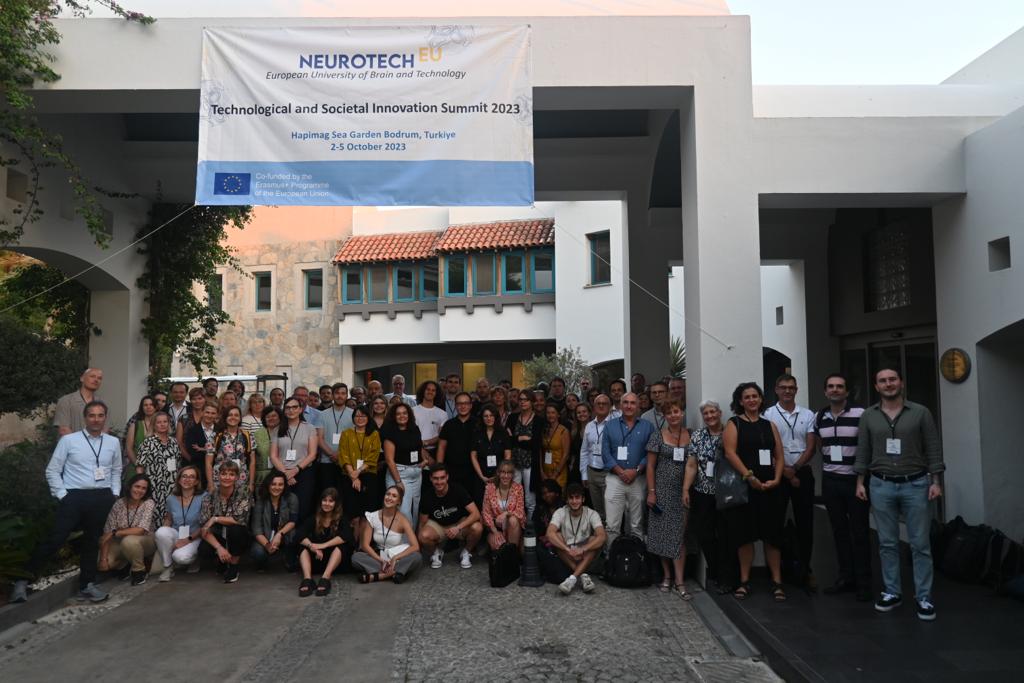
Türkiye'nin Bodrum kentinde düzenlenen NeurotechEU Teknolojik ve Toplumsal İnovasyon Zirvesi 2023, “Toplumsal Zorlukları Anlamak: Bir NeurotechEU Perspektifi” adlı projemizi NTEU topluluğuna ilk kez sunmak için harika bir fırsat oldu. Mükemmel bir lokasyonda gerçekleşen verimli bir toplantıydı!
Daha fazla haber:
Bu yıldan itibaren, Radboud Üniversitesi’nden (Nijmegen, Hollanda) Prof. Dr. Tansu Çelikel’in ve daha sonra Prof. Dr. Paul Verschure’nin görevini devralarak iNavigate’i koordine ediyorum. AB/AC ve/veya ABD'deki ortaklarımızla uluslararası ve sektörler arası araştırmalara katılmak isterseniz lütfen benimle iletişime geçin. iNavigate'in yeni web sitesi yakında https://inavigate-eu.bogazici.edu.tr adresinde yayına girecek.
Araştırma Projeleri:
Aktif:
873178 H2020-MSCA-RISE-2019
Schulz (CO) 15/7/23 – Present
Schulz (Acting CO) Jan 2023 – 14/7/23
‘Brain-inspired technologies for intelligent navigation and mobility (iNavigate)’
To bring together behavioral scientists, neuroscientists, computer scientists, and roboticists, residing in the EU/AC and the USA, to conduct joint research on intelligent navigation.
Role: Coordinator, PI
EPP-EUR-UNIV-2020-101004080 - WP6 Societal Innovation subgroup project
Schulz (PI) 10/2021 – Present
‘Understanding societal challenges: a NeurotechEU perspective’
A trans-national study with the goal to understand societal perspectives on neuro-technological advances.
Role: PI
22AG016 TÜBITAK
Yücesoy (CO), Öztürk-Isik (PI) 15/5/23 – Present
‘Small animal imaging application and innovation platform for the detection of aging in the brain and musculoskeletal system’ (P11)
To atlas the female aging rat brain using PET/CT, MRI, and behavior.
Role: Researcher
15981 BAP Start-Up
Schulz (PI) 20/5/20 – 19/5/23
‘Experience-driven (ed)-DBS to improve motor symptoms in the hemiparkinson rat model’
To test the feasibility of a new treatment approach (ed-DBS), in which deep brain stimulation is tailored to specific learning experiences involving S-S* contingencies. Role: PI
Yayınlar:
Schulz, D., Lillo-Navarro, C., Slors, M., Hrabeczy, A., Gustafsson, K., Reuter, M. (2023). Understanding societal challenges: a NeurotechEU perspective. Frontiers in Neuroscience, submitted.
Bilgen, G., Tanriverdi, D., Schulz, D. (2022). Predicting cognitive effort: role of mental energy, performance feedback, arithmetic skill, and caffeine. Advance. Preprint available at: https://doi.org/10.31124/advance.20738347.v2
Schulz, D. (2020). Depression development: From lifestyle changes to motivational deficits. Behavioural Brain Research, 395, 112845.
Gold, M.E.L., Norell, M., Budassi, M., Vaska, P., Schulz, D. (2018). Rapid 18F-FDG uptake in brain of awake, behaving rat and anesthetized chicken has implications for behavioral PET studies in species with high metabolisms. Frontiers in Behavioral Neuroscience, 12, 115.
Schulz, D. (2018). Food deprivation separates motor-activating from anxiolytic effects of caffeine in a rat open field. Behavioural Pharmacology, 29, 543-546.
Schulz, D. (2016). Seasonal effects of the monoamine oxidase inhibitor deprenyl but not the tricyclic antidepressant imipramine in rats bred for helplessness. Medical Science & Discovery, 3, 312-316.
Schulz, D., Henn, F.A., Petri, D., Huston, J.P. (2016). Rats bred for helplessness exhibit positive reinforcement learning deficits which are not alleviated by an antidepressant dose of the MAO-B inhibitor deprenyl. Neuroscience, 329, 83-92.
Gold, M.E.L., Schulz, D., Budassi, M., Gignac, P.M., Vaska, P., Norell, M.A. (2016). Flying starlings, PET and the evolution of volant dinosaurs. Current Biology, 26, R265-267.
Mirrione, M.M., Schulz, D., Lapidus, K., Zhang, S., Goodman, W., Henn, F.A. (2014). Increased metabolic activity in the septum and habenula during stress is linked to subsequent expression of learned helplessness behavior. Frontiers in Human Neuroscience, 8, 29.
Ottis, P., Topic, B., Loos, M., Li, K.W., de Souza Silva, M.A., Schulz, D., Smit, A.B., Huston, J.P., Korth, C. (2013). Aging-induced proteostatic changes in the rat hippocampus identify ARP3, NEB2 and BRAG2 as a molecular circuitry for cognitive impairment. PLoS One, 8, e75112.
Huston, J.P., de Souza Silva, M.A., Komorowski, M., Schulz, D., Topic, B. (2013). Animal models of extinction-induced depression: Loss of reward and its consequences. Neuroscience & Biobehavioral Reviews, 37, 2059-2070.
Seese, R.R., Chen, L.Y., Cox, C.D., Schulz, D., Babayan, A.H., Bunney, W.E., Henn, F.A., Gall, C.M., Lynch, G. (2013). Synaptic abnormalities in the infralimbic cortex of a model of congenital depression. Journal of Neuroscience, 33, 13441-13448.
Schulz, D., Smith, D.S., Yu, M., Lee, H., Henn, F.A. (2013). Selective breeding for helplessness in rats alters the metabolic profile of the hippocampus and frontal cortex: A 1H-MRS study at 9.4 T. International Journal of Neuropsychopharmacology, 16, 199-212.
Schulz, D., Vaska, P. (2011). The emerging discipline of behavioral neuroimaging. Reviews in the Neurosciences, 22, 591-592.
Schulz, D., Vaska, P. (2011). Integrating PET with behavioral neuroscience using RatCAP tomography. Reviews in the Neurosciences, 22, 647-655.
Maramraju, S.H., Smith, S.D., Junnarkar, S.S., Schulz, D., Stoll, S., Ravindranath, B., Purschke, M., Rescia, S., Southekal, S.S., Pratte, J.-F., Vaska, P., Woody, C.L., Schlyer, D.J. (2011). Small animal simultaneous PET/MRI: Initial experiences in a 9.4 T microMRI. Physics in Medicine & Biology, 56, 2459-2480.
Schulz, D., Southekal, S., Junnarkar, S.S., Pratte, J.-F., Purschke, M.L., Stoll, S.P., Ravindranath, B., Maramraju, S.H., Krishnamoorthy, S., Henn, F.A., Woody, C.L., Schlyer, D.J., Vaska, P. (2011). Simultaneous assessment of rodent behavior and neurochemistry using a miniature positron emission tomograph. Nature Methods, 8, 347-352.
Li, B., Piriz, J., Mirrione, M., Chung, C., Proulx, C.D., Schulz, D., Henn, F.A., Malinow, R. (2011). Synaptic potentiation onto lateral habenula neurons in the learned helplessness model of depression. Nature, 470, 535-539.
Von Wilmsdorff, M., Sprick, U., Bouvier, M.L., Schulz, D., Schmitt, A., Gaebel, W. (2010). Sex-dependent behavioral effects and morphological changes in the hippocampus after prenatal invasive interventions in rats: Implications for animal models of schizophrenia. Clinics, 65, 209-219.
Schulz, D., Mirrione, M., Henn, F.A. (2010). Cognitive aspects of congenital learned helplessness and its reversal by the MAO-B inhibitor deprenyl. Neurobiology of Learning and Memory, 93, 291-301.
Huston, J.P., Schulz, D., Topic, B. (2009). Toward an animal model of extinction-induced depression: Focus on aging and physiological indices. Journal of Neural Transmission, 116, 1029-1036.
Topic, B., Huston, J.P., Namestkova, K., Zhu, S.-W., Mohammed, A.H., Schulz, D. (2008). Extinction-induced “despair” in aged and adult rats: Links to neurotrophins in frontal cortex and hippocampus. Neurobiology of Learning and Memory, 90, 519-526.
Schulz, D., Aksoy, A., Canbeyli, R. (2008). Behavioral despair is differentially affected by the length and timing of photic stimulation in the dark phase of an LD cycle. Progress in Neuro-Psychopharmacology and Biological Psychiatry, 32, 1257-1262.
Schulz, D., Huston, J.P., Buddenberg, T., Topic, B. (2007). “Despair” induced by extinction trials in the water maze: Relationship with measures of anxiety in aged and adult rats. Neurobiology of Learning and Memory, 87, 309-323.
Schulz, D., Buddenberg, T., Huston, J.P. (2007). Extinction-induced “despair” in the water maze, exploratory behavior and fear: Effects of chronic antidepressant treatment. Neurobiology of Learning and Memory, 87, 624-634.
Schulz, D., Kouri, C., Huston, J.P. (2007). Behavior on the water maze platform: Relationship to learning and open field exploration in aged and adult rats. Brain Research Bulletin, 74, 206-215.
Sprick, U., von Wilmsdorff, M., Bouvier, M.-L., Schulz, D., Gaebel, W. (2006). Behavioral and hippocampal changes after prenatal invasive interventions with possible relevance to schizophrenia. Behavioural Brain Research, 172, 179-186.
Sergeeva, O.A.*, Schulz, D.* (*equal contribution), Doreulee, N., Ponomarenko, A.A., Selbach, O., Borsch, E., Kircheis, G., Häussinger, D., Huston, J.P., Häussinger, D., Haas, H.L. (2005). Deficits in cortico-striatal synaptic plasticity and behavioral habituation in rats with portacaval anastomosis. Neuroscience, 134, 1091-1098.
Topic, B., Dere, E., Schulz, D., de Souza Silva, M.A., Jocham, G., Kart, E., Huston, J.P. (2005). Aged and adult rats compared in acquisition and extinction of escape from the water maze: Focus on individual differences. Behavioral Neuroscience, 119, 127-144.
Schulz, D., Topic, B., De Souza Silva, M.A., Huston, J.P. (2004). Extinction-induced immobility in the water maze and its neurochemical concomitants in aged and adult rats: A possible model for depression? Neurobiology of Learning and Memory, 82, 128-141.
Schulz, D., Sergeeva, O.A., Ianovskii, E., Luhmann, H.J., Haas, H.L., Huston, J.P. (2004). Behavioural parameters in aged rats are related to LTP and gene expression of ChAT and NMDA-NR2 subunits in the striatum. European Journal of Neuroscience, 19, 1373-1383.
Aksoy, A., Schulz, D., Yilmaz, A., Canbeyli, R. (2004). Seasonal variability in behavioral despair in female rats. International Journal of Neuroscience, 114, 1513-1520.
Jezek, K., Schulz, D., De Souza Silva, M.A., Müller, H.-W., Huston, J.P, Hasenöhrl, R.U. (2003). Effects of chronic intraventricular infusion of heparin glycosaminoglycan on learning and brain acetylcholine parameters in aged rats. Behavioural Brain Research, 147, 115-123.
Schulz, D., Huston, J.P. (2002). The sliding window correlation procedure for detecting hidden correlations: Existence of behavioral subgroups illustrated with aged rats. Journal of Neuroscience Methods, 121, 129-137.
Schulz, D., Huston, J.P., Jezek, K., Haas, H.L., Roth-Härer, A., Selbach, O., Luhmann, H.J. (2002). Water maze performance, exploratory activity, inhibitory avoidance and hippocampal plasticity in aged superior and inferior learners. European Journal of Neuroscience, 16, 2175-2185.
Yilmaz, A., Schulz, D., Aksoy, A., Canbeyli, R. (2002). Prolonged effect of an anesthetic dose of ketamine on behavioral despair. Pharmacology, Biochemistry and Behavior, 71, 341-344.
Schulz, D., Canbeyli, R. (2000). Lesion of the bed nucleus of the stria terminalis enhances learned despair. Brain Research Bulletin, 52, 83-87.
Schulz, D., Canbeyli, R. (1999). Freezing behavior in BNST-lesioned Wistar rats. Annals of the New York Academy of Sciences, 877, 728-731.
BİLDİRİLER
Schulz, D., Reuter, M. (2023). Understanding Societal Challenges: a NTEU perspective. Technological and Societal Innovation Summit 2023 – Bodrum, Turkey.
Mirrione, M.M., Prina, M.L., Maas, A.A., Marks, K.A., Henn, F.A., Schulz, D. (2022). Molecular basis for antidepressant effects of deprenyl in rodents with congenital learned helplessness. Society for Neuroscience – San Diego, USA.
Tamer, B., Schulz, D. (2022). Discrimination learning in the hemiparkinson rat. International Symposium on Brain and Cognitive Science – Istanbul, Turkey.
Albayrak, E.B., Schulz, D. (2022). Generating non-normal distributions for interval schedules: Effects on instrumental behavior. International Symposium on Brain and Cognitive Science – Istanbul, Turkey.
Marks, K., Schulz, D., Mirrione M.M. (2021). Analysis of CaMKII in brain homogenate from an animal model of depressive-like behavior treated with deprenyl. Cognitive Neuroscience Society, Virtual Meeting.
Hajjar, A.J., Çakıcı, K., Küçük, M., Güçlü, B., Schulz, D. (2020). Measuring effortful motivation with HEFFORT: Psychometric testing and validation using machine learning. International Symposium on Brain and Cognitive Science – Ankara, Turkey.
Erkol, G., Biegon, A., Schulz, D. (2018). Intravenous infusion of dopamine D2/D3 agonist PHNO decreases indicators of sexual motivation in female rats. Federation of European Neuroscience Societies (FENS) – Berlin, Germany.
Schulz, D., Budassi, M, Kim, S.W., Muench, L., Fowler, J., Schlyer, D., Vaska, P. (2018). Further validation of the behavioral neuroimaging approach using RatCAP tomography, [11C]PHNO, and a paced mating paradigm. Federation of European Neuroscience Societies (FENS) – Berlin, Germany.
Firat, Z., Ture, U., Ozturk-Isik, E., Sarsilmaz, A., Ozdeniz, E., Schulz, D. (2017). Diffusion tensor imaging as a tool to predict memory deficits in left temporal lobe patients. European Society of Radiology – Vienna, Austria.
Gold, M.E.L., Schulz, D., Budassi, M., Vaska, P., Gignac, P., Norell, M. (2016). Applying dice-CT to PET: New tools for correlating morphology to function in living animals. International Congress of Vertebrate Morphology – Washington D.C, USA.
Schulz, D., Petri, D., Huston, J.P., Henn, F.A. (2015). Positive reinforcement learning is impaired in rats bred for helplessness and not reversible by monoamine oxidase (MAO)-B inhibitor deprenyl. Society for Neuroscience – Chicago, USA.
Ottis, P., Topic, B., Loos, M., Li, K.W., Desouza, A., Schulz, D., Smit, B., Huston, J.P., Korth, C. (2013). Age-associated insoluble hippocampal proteins involved in synaptic plasticity correlate with learning behavior in a rat model for MCI. Society for Neuroscience – San Diego, USA.
Maramraju, S.H., Smith, S.D., Stoll, S., Schulz, D., Rescia, S., Junnarkar, S., Purschke, M., Ravindranath, B., Vaska, P., Woody, C., Schlyer, D. (2011). Simultaneous PET/MRI: Evaluation of electromagnetic interactions and in vivo imaging in 9.4 T MRI. International Society for Magnetic Resonance in Medicine – Montréal, Québec, Canada. Proc. Intl. Soc. Mag. Reson. Med., 19, 3800.
Schulz, D., Southekal, S., Henn, F.A., Schlyer, D., Vaska, P. (2010). Simultaneous assessment of D2 receptor occupancy and spontaneous behavioral activity using the RatCAP tomograph. Society for Neuroscience – San Diego, USA.
Maramraju, S.H., Smith, S.D., Stoll, S., Schulz, D., Purschke, M., Ravindranath, B., Junnarkar, S.S., Vaska, P., Woody, C.L., Schlyer, D.J. (2010). Simultaneous PET/MR imaging results of a rat brain and a mouse heart with an MRI compatible PET detector in a 9.4 T microMRI. Society for Nuclear Medicine – Salt Lake City, USA.
Smith, S.D., Maramraju, S.H., Southekal, S., Ravindranath, B., Krishnamoorthy, S., Purschke, M., Junnarkar, S., Rescia, S., Schulz, D., Woody, C., Stoll, S., Vaska, P., Carrion, J., Schlyer, D., Benveniste, H. (2010). Simultaneous acquisition of MRI and PET cardiac cine 3D images at 9.4 Tesla. Journal of Cardiovascular Magnetic Resonance, 12, O59.
Schulz, D., Southekal, S., Schiffer, W., Henn, F.A., Schlyer, D., Vaska, P. (2009). PET imaging in behaving animals with the RatCAP tomograph. American College of Neuropsychopharmacology – Florida, USA.
Mirrione, M.M., Schulz, D., Dewey, S., Henn, F.A. (2009). Medial thalamic activation following inescapable shock correlates with subsequent learned helpless behavior. American College of Neuropsychopharmacology – Florida, USA.
Schulz, D., Southekal, S., Schiffer, W., Henn, F.A., Schlyer, D., Vaska, P. (2009). The RatCAP portable scanner: Towards PET imaging in behaving animals. International Behavioral Neuroscience Society – Nassau, Bahamas.
Schulz, D., Southekal, S., Junnarkar, S., Maramraju, S., Schiffer, W., Krishnamoorthy, S., Purschke, M., Vaska, P., Woody, C., Schlyer, D. (2009). 11C-Raclopride kinetics in awake and anesthetized rats using the RatCAP awake rat brain PET. Society for Nuclear Medicine – Toronto, Canada.
Southekal, S., Schulz, D., Schlyer, D., Junnarkar, S., Maramraju, S., Ravindranath, B., Stoll, S., Pratte, J.-F., Purschke, M., Woody, C., & Vaska, P. (2009). Quantitative dynamic neuroimaging with the RatCAP. IEEE Nuclear Science Symposium and Medical Imaging Conference – Florida, USA.
Maramraju, S.H., Smith, S.D., Rescia, S., Junnarkar, S.S., Ravindranath, B., Stoll, S., Purschke, M., Schulz, D., Southekal, S.S., Lenz, B., Pratte, J.-F., Vaska, P., Woody, C.L., Schlyer, D.J. (2009). Simultaneous acquisition of PET/MR images of small animals at 9.4 T. IEEE Nuclear Science Symposium and Medical Imaging Conference – Florida, USA.
Vaska, P., Kim, D.-H,, Southekal, S., Krishnamoorthy, S., Stoll, S., Fried, J., Schulz, D., Pratte, J.-F., Dragone, A., Cui, Y.-G., DeGeronimo, G., Bolotnikov, A., Woody, C.L., O’Connor, P. (2009). Performance of a prototype ultra-high resolution PET scanner using CZT pixel detectors. IEEE Nuclear Science Symposium and Medical Imaging Conference – Florida, USA.
Mirrione, M.M., Schulz, D., Dewey, S., Henn, F.A. (2008). Metabolic imaging in the learned helplessness model of depression implicates the habenula in altered neurocircuitry. American College of Neuropsychopharmacology – Arizona, USA.
Schulz, D., Mirrione, M.M., Henn, F.A. (2008). Behavioral concomitants of congenital learned helplessness and its reversal by a monoamine oxidase B inhibitor. Society for Neuroscience – Washington D.C., USA.
Mirrione, M.M., Schulz, D., Henn, F.A. (2008). Imaging neuronal activity in the learned helplessness model of depression using 18FDG microPET. Society for Neuroscience – Washington D.C., USA.
Henn, F.A., Schulz, D., Mirrione, M.M., Zink, M. (2008). Circuits and cells: The role of glutamate in sustaining learned helplessness. Symposium on glutamate evoked excitation: New evidence of glutamate’s role in the pathophysiology of mood disorders provides new targets for drug development. Collegium Internationale Neuro-Psychopharmacologicum – Munich, Germany.
Vaska, P., Woody, C., Schlyer, D., Junnarkar, S., Southekal, S., Schulz, D., Pratte, J.-F., Stoll, S., Purschke, M., Fried, J., Schiffer, W., Maramraju, S., Ravindranath, B., Krishnamoorthy, S., Radeka, V., O’Connor, P., Lecomte, R., Fontaine, R. (2008). Physics performance and quantitative brain imaging studies using the RatCAP tomograph. IEEE Nuclear Science Symposium and Medical Imaging Conference – Dresden, Germany.
Schlyer, D., Vaska, P., Woody, C., Schulz, D., Junnarkar, S., Southekal, S., Maramraju, S., Schiffer, W., Alexoff, D. (2008). Comparison of [11C]raclopride kinetics in awake and anesthetized rats using the RatCAP awake rat brain PET system. Society for Nuclear Medicine – New Orleans, USA.
Vaska, P., Woody, C., Schlyer, D., Pratte, J.-F., Junnarkar, S., Southekal, S., Stoll, S., Schulz, D., Schiffer, W., Alexoff, D., Lee, D., Patel, V., Purschke, M., Lee, W., Fried, J., Lenz, W., Krishnamoorthy, S., Maramraju, S., Kriplani, A., Radeka, V., O’Connor, P., Lecomte, R., Fontaine, R. (2007). The design and performance of the 2nd-generation RatCAP awake rat brain PET system. IEEE Nuclear Science Symposium Conference Record, 6, 4181-4184.
Schulz, D., Huston, J.P., Buddenberg, T., Topic, B. (2006). Extinction-induced despair in the water maze and its relationship with anxiety in aged and adult rats. Society for Neuroscience – Atlanta, USA.
Topic, B., Huston, J.P., Zhu, S.-W., Mohammed, A.H., Schulz, D. (2006). Neurotrophin protein levels in frontal cortex and hippocampus correlate with extinction-induced despair in the water maze in aged and adult rats. Society for Neuroscience – Atlanta, USA.
Schulz, D., Kouri, C., Topic, B., Huston, J.P. (2005). Platform behavior in the water maze and its correlates with spatial and procedural learning in aged and adult rats. Society for Neuroscience – Washington D.C., USA.
Schulz, D., Topic, B., De Souza Silva, M.A., Huston, J.P. (2004). Extinction-induced despair in the water maze: Promise of a conceptual and empirical model of human depression. International Behavioral Neuroscience Society – Florida, USA.
Topic, B., Jocham, G., Kart, E., Schulz, D., De Souza Silva, M.A., Huston, J.P. (2004). Individual differences in water maze performance and open field behavior in aged and adult rats. International Behavioral Neuroscience Society – Florida, USA.
Schulz, D., Kouri, C., Topic, B., De Souza Silva, M.A., Huston, J.P. (2003). Water maze extinction as a model of depression in aged and young rats: interaction of extinction-induced despair with learning ability and striatal neurotransmitters. Society for Neuroscience – New Orleans, USA.
Topic, B., Jocham, G., Schulz, D., Steenbergen, P.J., Oitzl, M.S., Meijer, O.C., Huston, J.P. (2003). Expression of central corticosteroid receptor mRNA in adult and aged rats differs not only as a function of age but also as a function of water maze performance. Society for Neuroscience – New Orleans, USA.
Schulz, D., Topic, B., Huston, J.P. (2003). Water maze extinction as a model of depression in aged and young rats: interaction of extinction-induced despair with learning ability. European Brain and Behaviour Society – Barcelona, Spain.
Schulz, D., Huston, J.P. (2002). The sliding window correlation procedure for detecting hidden correlations: Existence of subgroups with differing behavioral phenotype as illustrated with aged rats. 3rd Symposium on the Molecular Bases of Learning and Memory – Berlin, Germany.
Schulz, D., De Souza Silva, M.A., Holling, C., Huston, J.P., Haas, H.L., Sergeeva, O.A. (2002). Variability in water maze learning in relation to hippocampal NMDA-receptor subunit expression, serotonin turnover and acetylcholine in aged and adult rats. Federation of European Neuroscience Societies Forum – Paris, France.
Topic, B., Jocham, G., Schulz, D., De Souza Silva, M.A., Huston, J.P. (2002). Neurochemical and behavioral concomitants of extinction of water maze escape behavior in old and adult rats. International Behavioral Neuroscience Society – Napels, Italy.
Schulz, D., Huston, J.P. (2001). Behavioural and physiological concomitants of superior and inferior learning in aged rats. Behavioural Pharmacology, 12 (Suppl 1), S93.
Schulz, D., Huston, J.P., Luhmann, H.L., Yanovsky, Y., Haas, H.L., Sergeeva, O. (2001). Striatal ChAT correlates with learning rates whereas LTP and STP correlate with learning levels in aged rats which perform superior in the water maze. Society for Neuroscience – San Diego, USA.
De Souza Silva, M.A., Jezek, K., Schulz, D., Weth, K., Müller, H.W., Huston, J.P., Hasenöhrl, R.U. (2001). Facilitation of learning and modulation of frontal cortex acetylcholine by heparin glycosaminoglycan. Society for Neuroscience – San Diego, USA.
Schulz, D., Haas, H.L., Yanovsky, Y., Luhmann, H.J., Huston, J.P. (2001). Exploration and Morris maze performance in aged rats both correlate with hippocampal and striatal STP and LTP. International Behavioral Neuroscience Society – Cancun, Mexico.
Schulz, D., Huston, J.P., Jezek, K., Haas, H.L., Yanovsky, Y., Roth-Härer, A., Selbach, O., Luhmann, H.J. (2000). Water maze learning in aged rats correlates with short- and long-term potentiation in the hippocampus and striatum. Society for Neuroscience – New Orleans, USA.
Canbeyli, R., Babacan-Yildiz, G., Schulz, D., Aksoy, A., Tataroglu, O, Yilmaz, A. (1999). Time-dependent effect of ketamine on forced swim tests in male Wistar rats. Society for Neuroscience – Miami, USA.
Schulz, D., Canbeyli, R. (1998). Assessment of learned despair and freezing behavior in BNST lesioned Wistar rats. New York Academy of Sciences – Virginia, USA.
Schulz, D., Celikel, T., Canbeyli, R. (1998). Effect of BNST lesions on learned despair as measured by forced swimming tests in male Wistar rats. Society for Neuroscience – Los Angeles, USA.
Canbeyli, R., Celikel, T., Hasanoglu, A., Schulz, D., Geissler, A.E. (1997). Depressant effect of bilateral lesions of suprachiasmatic nuclei in rats as measured by the forced swimming test. Society for Neuroscience – New Orleans, USA.
Canbeyli, R., Celikel, T., Akin, O., Schulz, D., Cansiz, S., Celen, H., Eslen, H., Sohtorik, Y. (1997). Differential effect of different tone sequences on the forced swim performance of female rats. European Psychology Congress – Dublin, Ireland
Yorumcu:
Yayıncılık Faaliyetleri (seçili)
2022 – Günümüz
Associate Editor; Frontiers in Behavioral Neuroscience – Individual and Social Behaviors
2010 – Günümüz
Editorial Board; Behavioural Brain Research
2005 – Günümüz
Journal Referee; Behavioural Brain Research; European Neuropsychopharmacology; Frontiers in Human Neuroscience; Human Brain Mapping; Life Sciences; Molecular Psychiatry; Nature Protocols; Neurobiology of Learning and Memory; Neuropsychiatric Disease and Treatment; Neuroscience; Neuroscience Letters; Pharmacological Research; Pharmacology, Biochemistry and Behavior; Physiology & Behavior; PlosOne; Schizophrenia Bulletin
Ayrıca Behavioural Brain Research dergisinde konuk editörlük görevini üstlendim:Special Issue ‘Depression Symptomatology’ (2018 – 2020), available at https://www.sciencedirect.com/journal/behavioural-brain-research/special...
Ve *Reviews in the Neurosciences* dergisinin 22. cilt, 6. sayısında konuk editör olarak:
Special Issue ‘Behavioral Neuroimaging’ (2011), available at https://www.degruyter.com/journal/key/revneuro/22/6/html
İletişim:
Daniela Schulz, Ph.D.
Associate Professor
Boğaziçi University
Institute of Biomedical Engineering
Center for Life Sciences and Technologies
Kandilli Campus
34684 ISTANBUL, Turkey
Telefon Numarası:
+90 536 592 5514
Akademik Web Sayfası:
Laboratuvarım:
https://bbl.bogazici.edu.tr/
iNavigate:
https://inavigate-eu.bogazici.edu.tr/
Dersler:
BM 587 Advanced Research Methods
BM 592 RatCAP Research Applications and Development
