


Albert GÜVENİŞ

Professor
Dr. Albert Güveniş received his PhD. degree from Drexel University, Philadelphia, USA. He then worked as a researcher and a faculty member at the Radiology Dept. in the Hospital of the University of Pennsylvania, Philadelphia, USA in the area of Positron Emission Tomography. He then joined Boğaziçi University, founded first as Robert College in 1863 and has produced Nobel Prize and several Prime Ministers across the Balkans. Prof Albert Güveniş, PhD has been faculty member at Drexel University, University of Pennsylvania, and Boğaziçi University. He has worked on systems modeling, reliability optimization and the development of a new Positron EmissionTomography (PET) unit in the USA. He initiated several educational initiatives in the area of medical imaging including a laboratory and a certificate training program for radiology professionals. He also initiated research studies on hybrid medical imaging and modeling for major diseases such as Cancer and Alzheimer's Diseases. These studes are geared to achieve precision diagnosis and treatment and include systems optimization and quantification besides AI applications for virtual biopsy. . He coholds a US patent that has been awarded a gold medal. He also received the award of best paper in Hungary. He participated in international research projects that led
to publications in journals with high impact factors. He delivered a tutorial speech in Spain on the statistical design of biomedical systems. Some of his publications have been designated as editor’s choice. He has been collaborating with a large number of organizations of global impact such as WHO, Switzerland, JCI, ECRI and MOFFITT, USA. He is currently a member in the technical committees of international conferences and a reviewer for several Web of Science indexed journals. He is currently the principle and associate researcher for a number of funded medical imaging research projects. Prof Albert Güveniş is a member of IEEE, the Sigma Xi honorary research organization and the Philadelphia based International Alzheiemr's Association..

Dr. Güveniş was invited to join the Chicago based Joint Commission team to assess the efficiency and quality of a hospital in Palm Desert, California USA.
RESEARCH OPPORTUNITIES
AI and Precision Medicine Systems Development with Molecular and Hybrid Imaging
The goal is to increase the effectiveness of currrent biomedical systems using AI and personalized schemes. High efficacy medical systems and procedures are devised as solutions to pressing problems for major diseases such as Cancer and Alzheimer's Disease diagnosis and therapy. Possibilities exist for work in the USA as part of the degree program with our partners.
PhD and MSc degree programs at international level for a brilliant career in a highly important area.
Those interested in applying may join our informative bi-monthly meetings (send email to guvenis@bogazici.edu.tr) to have more ample information on our research program. Financial support possibilities are offered to interested students.
Innovation oriented MSc thesis focusing on technology design for needs in health care.
We currently have two active research programs:
I. Alzheimer’s Diagnostics and Staging using FDG PET Imaging and Radiomics
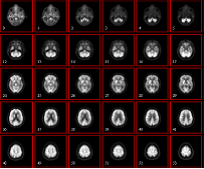


Our paper on Alzheimer's Disease Radiomics has been accepeted and presented at the World Molecular Imaging Conference in Montreal Canada (WMIC 2024). Since then we have published a number of journal papers on the subject.
Rasi, R., Guvenis, A. and Alzheimer’s Disease Neuroimaging Initiative, 2025. Radiomics features of FDG PET images predict ApoE4. European Journal of Radiology Artificial Intelligence, p.100009.
Please click for seeing:
Our activities on Alzheimer's Disease: Looking for clinical data & collaboration
We are able to predict AD using one brain region and two imaging features! Qualified MSc and PhD students, join us to participate in this exciting work.
Our other recent international journal publication on Alzheimer's Disease shows that it is possible to predict amyloid positivity non-invasively using imaging features!
Rasi, R., Guvenis, A. and Alzheimer's Disease Neuroimaging Initiative, 2024. Predicting amyloid positivity from FDG-PET images using radiomics: A parsimonious model. Computer Methods and Programs in Biomedicine, p.108098.
II. Cancer Diagnostics and Characterization using PET CT maging and Radiomics
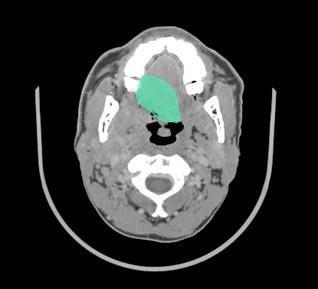
We are able to characterize tumors' molecular propertiers such as gene variations and othegr characteristics such as a virus positivity, stage, grade, prognosis using PET CT data.
Our student working on cancer has received FULLBRIGHT award to conduct and continue our planned research in a prominent US lab.
She is presently in the USA and working on the heterogeneous analysis of H&N tumors with top international colaborators.
Our new publication
https://onlinelibrary.wiley.com/doi/10.1002/cam4.71481
Our international journal publication on H&N Cancer has been selected as editor's choice.
Altinok, O. and Guvenis, A., 2023. Interpretable radiomics method for predicting human papillomavirus status in oropharyngeal cancer using Bayesian networks. Physica Medica, 114, p.102671.
We went to Canary Islands with two long papers on Alzehimer's Disease and Cancer (Summer 2023). We also presented a paper at the Symposium on Drug Research and Development (DRD) 2023 in Izmir. Many other projects and journal publications are on the way.
Two book chapters are now published
Rasi, R. and Guvenis, A., 2023, June. A Platform for the Radiomic Analysis of Brain FDG PET Images: Detecting Alzheimer’s Disease. Cham: Springer Nature Switzerland. Lecture Notes in Computer Science book series (LNBI,volume 13919) (pp. 244-255).
https://link.springer.com/chapter/10.1007/978-3-031-34953-9_19
Sarac, K. and Guvenis, A., 2023, June. Determining HPV Status in Patients with Oropharyngeal Cancer from 3D CT Images Using Radiomics: Effect of Sampling Methods. Lecture Notes in Computer Science book series (LNBI,volume 13920) . Cham: Springer Nature Switzerland (pp. 27-41)
https://link.springer.com/chapter/10.1007/978-3-031-34960-7_3
Recent Publications
Rasi, R., Guvenis, A. and Alzheimer’s Disease Neuroimaging Initiative, 2025. Radiomics features of FDG PET images predict ApoE4. European Journal of Radiology Artificial Intelligence, p.100009.
Rasi, R., Guvenis, A. and Alzheimer's Disease Neuroimaging Initiative, 2024. Predicting amyloid positivity from FDG-PET images using radiomics: A parsimonious model. Computer Methods and Programs in Biomedicine, p.108098.
Rasi, R. and Guvenis, A., 2023, June. A Platform for the Radiomic Analysis of Brain FDG PET Images: Detecting Alzheimer’s Disease. In International Work-Conference on Bioinformatics and Biomedical Engineering (pp. 244-255). Cham: Springer Nature Switzerland.
Sarac, K. and Guvenis, A., 2024. Using radiomics for predicting the HPV status of oropharyngeal tumors. Journal of Engineering and Applied Science, 71(1), p.11.
Altinok, O. and Guvenis, A., 2023. Interpretable radiomics method for predicting human papillomavirus status in oropharyngeal cancer using Bayesian networks. Physica Medica, 114, p.102671.
Karagöz, A. and Guvenis, A., 2023. Robust whole-tumour 3D volumetric CT-based radiomics approach for predicting the WHO/ISUP grade of a ccRCC tumour. Computer Methods in Biomechanics and Biomedical Engineering: Imaging & Visualization, 11(3), pp.665-677.
Bayat, F.K., Alp, M.İ., Bostan, S., Gülçür, H.Ö., Öztürk, G. and Güveniş, A., 2022. An improved platform for cultured neuronal network electrophysiology: multichannel optogenetics integrated with MEAs. European Biophysics Journal, 51(6), pp.503-514.
ŞİRİN, D. and GÜVENİŞ, A., PREDICTING KIDNEY TUMOR SUBTYPE FROM CT IMAGES USING RADIOMICS AND CLINICAL FEATURES. Natural and Applied Sciences Journal, 5(1), pp.29-37.
Guvenis, A., 2021, August. Evaluating Mobile Tele-radiology Performance for the Task of Analyzing Lung Lesions on CT Images. In Lecture notes (2022 Vol. 784, p. 116). Springer Nature.
Altinok, O. and Guvenis, A., 2022. Interpretable Radiomics Method for Predicting Human Papillomavirus Status in Oropharyngeal Cancer using Bayesian Networks. medRxiv.
Patents, start-ups and international work are our modes of work.
The research goal of our group is to attain high precision and effective personalized diagnostic and theranostic schemes for major diseases, in particular for cancer, by the use of several methods including molecular imaging, systems modeling and signal/image processing . As a group one major goal is to attain high effectiveness in the diagnosis and treatment of cancer. We know what blocks the development of effective diagnostic therapeutic strategies and are working with our international partners to solve them.
We have already achieved a number of breakthrough results which are being published in high impact journals. These results should improve detection and management effectiveness and therefore outcomes.
Memberships include AHA, IEEE and Imaging Standards Committees, Drexel University Engineering Alumni Association. Main research activities/expertise areas include computational engineering, stochastic systems modeling, molecular and hybrid imaging, quantitation, 3D display, radiotherapy planning, and precision in medicine.
Prof. Albert Güveniş received his PhD. degree from Drexel University, Philadelphia, USA. He then worked as a researcher and a faculty member at the Radiology Dept. in the Hospital of the University of Pennsylvania, Philadelphia, USA in the area of Positron Emission Tomography. He is an alumnus of the French School Saint Michel.
Drexel University, USA (Instructor)
University of Pennsylvania, USA (Assistant Professor)
Boğaziçi University (Associate and Full Professor)
Organized Educational Activities and Conferences
EU and other Educational Projects Initiation and Administration of EUROPEAN UNION (EC) and other Educational Programs for continuing education.
Co-training of hundreds of radiology personnel on imaging technology. 1/2 M USD FUNDING was raised.
IEEE EMBS Conference Organization
Many other conference organizations both locally and i-internationally
International Sectoral Projects
International Collaboration in Biomedical Sectoral Projects (Major multinational project cosigned by Prof Necmi TANYOLAC who founded the institute and Dr. Joel NOBEL of ECRI, Philadelphia, USA.) Emergency Care Research Institute ECRI, Philadelphia, USA, Joint Comission of Accreditation of Healthcare Organizations, JCAHO, Chicago, USA, World Health Organization, WHO, Geneva, SWITZERLAND
Academic Reviewing and Editorial Boards
- International Journal & Conference Reviewer activities
- invitations to WOS Journal Editorial Boards as well as Key Notes for conferences.
Participation and contribution to International Major PET Standards Committee efforts.
Biomedical Technology Development & Comercialization
Co-inventor - Patent (https://patents.google.com/patent/WO2016209184A1/ar) (USA application filed) - Award (4th among 5,000+ projects by ISO - BU TTO license agreement signed for production
Referee and Advisory Activities
Many BAP projects, TEYDEB, Jury and mentor for INNOVITA, ISEK (in Collaboration with Prof Dr. Cengizhan Öztürk) HAYALET, Member, LSRC, IEEE, AHA, Drexel University Engineering Alumni Association, TC for Int Conferences, Int Standards Committees,Adbvbisory Board Member for Academic Departments.

Cancer and Alzheimer's Disease Imaging and Modeling
AI and Molecular Imaging
Precision Medicine Systems
Virtual Biopsy, Digital Twins for Disease Management,

Research Fellowship Drexel University
BUVAK Publication Award (A class publication)
Best Oral Presentation Paper Award in Budapest, Hungary 2017
Gold Medal for a Sleep Apnea Patent
Speaker Award, Puna, India
Reviewer Appreciation Certificates

Key note speech invitation to Iseveral meetings
Ongoing projects and publications
Alzheimer's Disease
Cancer Imaging
Quantification and Image Restoration / Dose Reduction
Considering short term trainning and graduate study proposals
New papers accepted by high impact Journals (2025) in Cancer and Alzheimer's Disease Imaging
http://dx.doi.org/10.1002/cam4.71481
Subregional Limbic Radiomics on FDG-PET Provides Accurate Early Detection of Alzheimer's Disease Ramin Rasi, Albert Guvenis
FDG-PET Detects Amygdala-Hippocampal Connection Volume and Heterogeneity in Alzheimer's Disease ProgressionRamin Rasi, Albert Guvenis
Affiliations with major cancer research laboratories - High sensitivity early detection of cancerous tumours in Nuclear Medicine Imaging (Positron Emission Tomography PET and Single Photon Emission Computed Tomography, SPECT) - Tumour Delineation and Radiotherapy planning accuracy optimization in order to minimize the inflicted damage to the patient and maximize the curing effect - PET and CT Radiomics & Radiogenomics - Medical image quality optimization and assessment in Radiology & Nuclear Medicine for critical clinical applications (e.g. lung cancer) Core Research Team: Albert Guvenis, Didar Talat, Alpaslan Koc, Niyazi Erturk, Dilara Turegun; + Many other students.
Local and worldwide collaborators: We are often hosting international researchers (e.g. from the US) in our premises for enriching our research team. Those researchers who finish an innovative project are often solicited by overseas research institutions mainly in the US. Research Partnership Sollicitations should be addressed to Prof INCE. Collaborations are being conducted and considered in order to enrich our research studies and goals.
(From NCI)
Selected Recent Publications
Rasi, R., Guvenis, A. and Alzheimer’s Disease Neuroimaging Initiative, 2025. Radiomics features of FDG PET images predict ApoE4. European Journal of Radiology Artificial Intelligence, p.100009.
Rasi, R., Guvenis, A. and Alzheimer's Disease Neuroimaging Initiative, 2024. Predicting amyloid positivity from FDG-PET images using radiomics: A parsimonious model. Computer Methods and Programs in Biomedicine, p.108098.
Rasi, R. and Guvenis, A., 2023, June. A Platform for the Radiomic Analysis of Brain FDG PET Images: Detecting Alzheimer’s Disease. In International Work-Conference on Bioinformatics and Biomedical Engineering (pp. 244-255). Cham: Springer Nature Switzerland.
Sarac, K. and Guvenis, A., 2024. Using radiomics for predicting the HPV status of oropharyngeal tumors. Journal of Engineering and Applied Science, 71(1), p.11.
Altinok, O. and Guvenis, A., 2023. Interpretable radiomics method for predicting human papillomavirus status in oropharyngeal cancer using Bayesian networks. Physica Medica, 114, p.102671.
Karagöz, A. and Guvenis, A., 2023. Robust whole-tumour 3D volumetric CT-based radiomics approach for predicting the WHO/ISUP grade of a ccRCC tumour. Computer Methods in Biomechanics and Biomedical Engineering: Imaging & Visualization, 11(3), pp.665-677.
Bayat, F.K., Alp, M.İ., Bostan, S., Gülçür, H.Ö., Öztürk, G. and Güveniş, A., 2022. An improved platform for cultured neuronal network electrophysiology: multichannel optogenetics integrated with MEAs. European Biophysics Journal, 51(6), pp.503-514.
ŞİRİN, D. and GÜVENİŞ, A., PREDICTING KIDNEY TUMOR SUBTYPE FROM CT IMAGES USING RADIOMICS AND CLINICAL FEATURES. Natural and Applied Sciences Journal, 5(1), pp.29-37.
Guvenis, A., 2021, August. Evaluating Mobile Tele-radiology Performance for the Task of Analyzing Lung Lesions on CT Images. In Lecture notes (2022 Vol. 784, p. 116). Springer Nature.
Altinok, O. and Guvenis, A., 2022. Interpretable Radiomics Method for Predicting Human Papillomavirus Status in Oropharyngeal Cancer using Bayesian Networks. medRxiv.
Tunali, I., Tan, Y., Gray, J.E., Katsoulakis, E., Eschrich, S.A., Saller, J., Aerts, H.J., Boyle, T., Qi, J., Guvenis, A. and Gillies, R.J., 2021. Hypoxia-Related Radiomics and Immunotherapy Response: A Multi-Cohort Study of Non-Small Cell Lung Cancer. JNCI Cancer Spectrum.
Bayat, F.K., Polat Budak, B., Yiğit, E.N., Öztürk, G., Gülçür, H.Ö. and Güveniş, A., 2021. Adult mouse dorsal root ganglia neurons form aberrant glutamatergic connections in dissociated cultures. PloS one, 16(3), p.e0246924.
Damgaci, S., Enriquez-Navas, P.M., Pilon-Thomas, S., Guvenis, A., Gillies, R.J. and Ibrahim-Hashim, A., 2020. Immunotherapy on acid: opportunities and challenges. European Journal of Clinical Nutrition, 74(1), pp.3-6.
(A Nature Journal)
Oral, A. and Guvenis, A., 2021. Improving the detectability of overactive glands in dual-phase parathyroid SPECT/CT: a Monte Carlo simulation study. Biomedical Physics & Engineering Express, 7(4), p.045023.
Koç A, Güveniş A. Design and evaluation of an accurate CNR-guided small region iterative restoration-based tumor segmentation scheme for PET using both simulated and real heterogeneous tumors. Medical & Biological Engineering & Computing. 2020 Feb;58(2):335-55.
Tunali I, Tan Y, Gray JE, Katsoulakis E, Eschrich SA, Saller J, Boyle T, Qi J, Guvenis A, Gillies RJ, Schabath MB. Hypoxia-related radiomics predict immunotherapy response: A multi-cohort study of NSCLC. bioRxiv. 2020 Jan 1.
Ökmen HB, Uysal H, Guvenis A. Automated Prediction Of TNM Stage For Clear Cell Renal Cell Carcinoma Disease By Analyzing CT Images of Primary Tumors. In 11th International Conference on Electrical and Electronics Engineering (ELECO) 2019 Nov 28 (pp. 456-459). IEEE (Long paper in XPlorer published on 13 February 2020).
Tunali, Ilke, Yan Tan, Jhanelle E. Gray, Evangelia Katsoulakis, Steven A. Eschrich, James Saller, Theresa Boyle et al. "Hypoxia-related radiomics predict checkpoint blockade immunotherapy response of non-small cell lung cancer patients." AACR (2020): 5806-5806.
SCI Journals such as Springer Nature and international conferences
+90 216 516 3464
BM 611 Nuclear Medicine (Molecular Imaging) Instrumentation -(Electronics and applications image processing software)
BM 680 Special Topics: Biomedical Probabilistic Systems Modeling and Design
BM 584 Computational Methods in Nuclear Medicine Imaging
BM 600 Biomedical Image Processing
BM 601 Reconstruction of Data From Projections
BM 602 Medical Imaging
BM 58X Modeling for Digital Twins (Underway)
Electronics 1 and 2 (Drexel University, USA)
Electric Machinary (Drexel University, USA

